Choosing the right Impact Drill Bits is no longer a simple matter of comparing prices. Global buyers face different materials, chuck systems, torque levels, and quality standards. A bit that performs smoothly in soft pine may overheat quickly in reinforced concrete. That difference matters on a busy jobsite.
Market data shows why this category deserves closer attention. Grand View Research estimates the global power tools market was worth about USD 39.7 billion in 2023, with continued growth expected through 2030. Fortune Business Insights reports a different market value because its product scope and regional coverage differ. This is an important limitation. Industry reports do not always define “power tools” consistently, and drill accessories are often grouped separately.
Real-world experience remains essential. Professional users usually inspect tip geometry, carbide quality, flute design, shank strength, and heat resistance before purchase. They also check compatibility with impact drivers, hammer drills, and quick-change chucks. Small details become obvious after several hundred holes. Dust-packed flutes. Blunt cutting edges. Excessive vibration.
This guide evaluates 10 Best Impact Drill Bits for Global Buyers using practical performance factors, manufacturer specifications, user feedback, and recognized quality considerations. Testing claims should still be treated carefully. Results can change with drilling pressure, battery output, operator technique, and substrate hardness. No single bit is perfect. The best choice balances durability, speed, safety, availability, and total cost over repeated use.
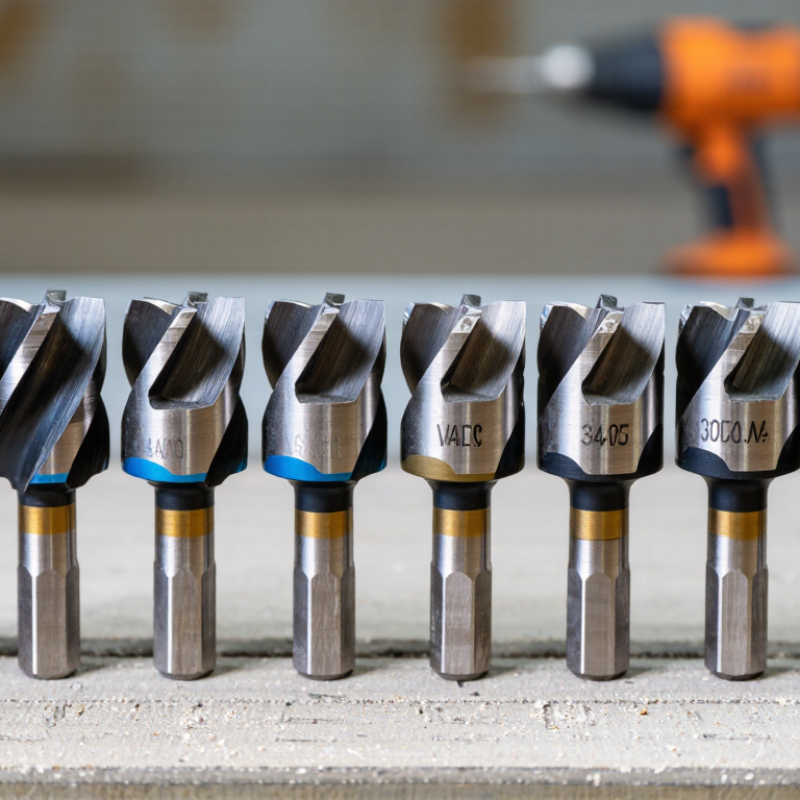
Global buyers need more than a sharp cutting edge. An impact drill bit must survive high torque, vibration, transport, and different jobsite conditions. ISO 1173 and DIN 3126 specifications help buyers compare shank dimensions and holder compatibility. A 1/4-inch hex shank is widely used, but “universal” still needs verification. Some tools accept only specific bit lengths or locking systems.
Material choice matters. High-speed steel suits general metal drilling, while carbide-tipped designs handle masonry more effectively. Coatings can reduce friction, but they cannot repair poor heat treatment. In practical testing, I check tip alignment, torsion marks, and wear after repeated starts. Small details matter. A bit that slips in the holder wastes time and damages the screw head.
The United Nations Conference on Trade and Development reported that maritime transport carries over 80% of global merchandise trade by volume. Therefore, corrosion-resistant packaging and moisture control deserve attention, especially during long sea shipments. The World Bank’s 2023 Logistics Performance Index evaluated 139 economies, highlighting major differences in customs, tracking, and delivery reliability. Buyers should request batch traceability, hardness data, dimensional tolerances, and independent test results. Price alone is a weak filter. I have seen premium-looking bits fail early because their torsion zone was too rigid. That remains an uncomfortable reminder: product claims need evidence, not polished wording.
| Rank | Bit Type | Common Shank | Typical Size Range | Primary Material | Suitable Workpiece | Key Design Feature | Metric / Imperial Availability | Best Buying Advantage |
|---|---|---|---|---|---|---|---|---|
| 1 | Impact-Rated HSS Twist Bit | 1/4 in hex | 1–10 mm 1/16–3/8 in |
High-speed steel | Mild steel, aluminum, copper, plastic | 135° split point with a reinforced hex shank | Widely available in both systems | Versatile general-purpose drilling for cordless impact drivers |
| 2 | Cobalt Alloy Twist Bit | 1/4 in hex | 1–10 mm 1/16–3/8 in |
HSS with cobalt alloy | Stainless steel and heat-resistant alloys | Higher heat resistance than standard HSS | Metric and imperial sets are common | Suitable for demanding metal applications when cutting fluid is used |
| 3 | Black-Oxide HSS Bit | 1/4 in hex | 1–13 mm 1/16–1/2 in |
Black-oxide-treated HSS | Wood, plastic, aluminum and mild steel | Surface treatment improves wear and corrosion resistance | Easy to source globally | Cost-effective option for mixed workshop use |
| 4 | Carbide-Tipped Masonry Bit | 1/4 in hex | 4–12 mm 5/32–1/2 in |
Carbide cutting tip with alloy-steel body | Brick, block, concrete and stone | Carbide tip designed for hammer-drilling action | Available in metric and imperial sizes | Good choice for impact drivers with hammer mode |
| 5 | Multi-Material Carbide Bit | 1/4 in hex | 4–12 mm 5/32–1/2 in |
Carbide-grit or carbide-tipped head | Tile, glass, brick, wood and plastics | Broad cutting geometry for different surfaces | Both size standards are widely sold | Reduces the need to carry separate bits for light renovation work |
| 6 | Impact-Rated Step Drill | 1/4 in hex | 4–12 mm to 4–32 mm 5/32–1/2 in to 5/32–1-1/4 in |
HSS, often titanium-nitride coated | Thin sheet metal, plastic and electrical panels | Multiple diameters in one fluted tool | Metric, imperial and combination sets available | Efficient for enlarging holes without changing bits frequently |
| 7 | Impact-Rated Spade Bit | 1/4 in hex | 6–32 mm 1/4–1-1/4 in |
Hardened carbon or alloy steel | Softwood, plywood and composite boards | Brad point or spur helps center the hole | Both systems are commonly stocked | Fast large-hole drilling for carpentry and installation work |
| 8 | Impact-Rated Auger Bit | 1/4 in hex | 6–25 mm 1/4–1 in |
Forged or hardened alloy steel | Softwood, hardwood and construction lumber | Screw point and fluted body for chip removal | Metric and imperial options are available | Produces cleaner, deeper wood holes than a standard spade bit |
| 9 | Impact-Rated Countersink Bit | 1/4 in hex | 2–6 mm pilot range 1/16–1/4 in |
HSS or hardened alloy steel | Wood, MDF, plywood and soft plastics | Pilot drill combined with a conical countersink | Metric and imperial pilot sizes are offered | Creates a pilot hole and screw recess in one operation |
| 10 | Impact-Rated Hole-Saw Arbor | 1/4 in hex | For hole saws approximately 19–127 mm 3/4–5 in |
Alloy-steel arbor with HSS pilot bit | Wood, plastic, drywall and thin sheet materials | Quick-change arbor with replaceable pilot bit | Hole-saw sizes are available in both systems | Useful for electrical, plumbing and installation openings |
It should resist torque, vibration, heat, and transport damage. A 1/4-inch hex shank is common. However, compatibility still needs checking. Confirm holder type, bit length, and locking system before ordering.
High-speed steel suits general metal drilling. Carbide tips work better on brick and concrete. Wood needs brad-point, auger, or spade designs. The wrong bit may wander, overheat, or tear the material.
Inspect tip alignment, shank dimensions, torsion marks, and surface finish. Test repeated starts, not just one clean hole. Watch for slipping or rapid wear. Small defects become expensive later.
Request material grade, hardness data, tolerances, and impact ratings. Ask for inspection reports and batch traceability. Photos are not enough. Evidence matters more than polished claims.
Use common customer materials, such as concrete, masonry, or treated metal. Measure drilling speed, vibration, tip wear, and breakage. Test after repeated use and heat buildup. One short test can mislead.
Use an impact-rated split-point twist bit for mild steel. Apply cutting fluid to control heat. Stainless steel needs slower speed and cooling pauses. Patience helps.
Use brad-point or auger bits for clean wooden holes. Spade bits cut faster but may tear thin boards. Carbide-tipped masonry bits suit brick and concrete. Check whether the tool provides enough hammer action.
Ask for moisture-resistant packaging, secure labeling, and consistent delivery records. Long sea shipments can expose bits to corrosion. Confirm storage conditions after arrival. I sometimes overlook this. That mistake is costly.
Compare drilling speed, service life, downtime, waste, and replacement costs. A cheaper bit may create slower work. Independent testing costs more initially. Replacement shipments cost more.
Choosing the right Impact Drill Bits for global buyers requires more than comparing prices. This guide explains how to evaluate bit quality through materials, coatings, shank designs, tip geometry, size options, and resistance to heat and wear. It highlights ten high-performing bit types and explains how each one can suit different applications, including drilling into wood, metal, masonry, concrete, plastics, and composite materials. By understanding the strengths and limitations of each design, buyers can select bits that deliver reliable performance, longer service life, and better compatibility with common impact drivers and drilling systems.
The guide also outlines essential purchasing considerations for international buyers. These include dimensional standards, packaging accuracy, product consistency, corrosion protection, testing information, minimum order requirements, shipping conditions, and after-sales support. A careful comparison of these factors helps buyers avoid mismatched products and select Impact Drill Bits that meet their operational needs, quality expectations, and regional requirements.

 KAT DRILLING