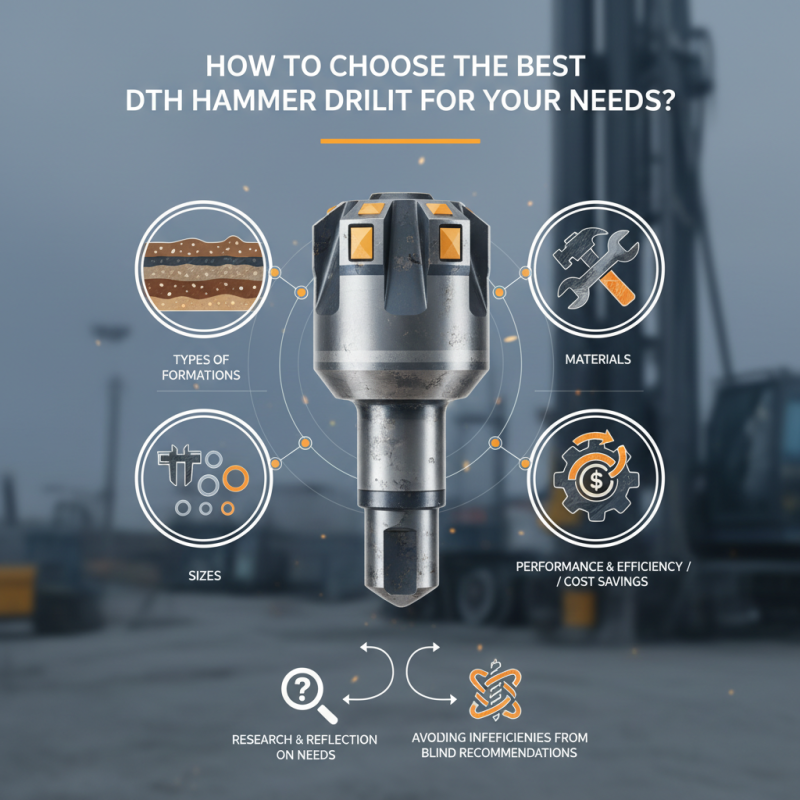
Choosing the right DTH hammer drill bit is crucial for any drilling project. It can make a significant difference in performance and efficiency. Many factors come into play, and understanding them is essential. The correct bit can save time and reduce costs in the long run.
Not all DTH hammer drill bits are created equal. Each type serves a specific purpose. You should consider the materials, sizes, and the types of formations you will encounter. A well-chosen bit can enhance your drilling experience. It can also lead to better results in challenging environments.
Many users make the mistake of relying solely on recommendations without analyzing their specific needs. This can lead to inefficiencies and frustrations. Take the time to research and reflect on your requirements. The right DTH hammer drill bit can optimize your operations and minimize setbacks.
DTH hammer drill bits, or down-the-hole drill bits, are essential tools in various drilling applications. They work by utilizing a percussive mechanism to break through hard materials like rock and concrete. The drill bit is connected to a pneumatic hammer, which delivers rapid strikes to effectively penetrate tough surfaces. This mechanism allows for efficient drilling in mining, construction, and geological exploration.
Understanding the components of a DTH hammer drill bit is crucial. The bit's design often includes a tungsten carbide tip, which enhances durability and performance. The size and shape of the bit influence its drilling depth and speed. An appropriate selection of bit size can significantly affect the overall efficiency of the project. However, some operators might underestimate the importance of maintaining these bits, leading to increased wear and tear.
Choosing the right DTH hammer drill bit involves careful consideration of your specific needs. Factors like the type of material being drilled and the desired depth of the hole can impact your choice. Not every bit will perform well in all conditions. It’s vital to evaluate the context of your work environment. Relying on recommendations without understanding your requirements may lead to suboptimal performance. Each drilling situation is unique and may require adjustments and tests to get the best results.
When selecting a DTH hammer drill bit, several critical factors come into play. The type of material you plan to drill into is paramount. For instance, harder rock formations require a more robust bit design. According to a 2022 industry report, using the wrong bit can lead to a 30% decrease in drilling efficiency. Understanding the geological conditions can help you choose a bit that enhances performance and longevity.
Another crucial factor is the bit’s diameter. Larger diameters allow for faster drilling but can create issues with stability in softer materials. A 2023 research study revealed that bits with a diameter greater than 6 inches often underperform in unstable formations. Balancing bit size with material is key to maximizing effectiveness. Consider your specific project requirements before making a decision.
Lastly, assessing the bit material and design is essential. Several materials impact wear resistance and penetration. For example, tungsten carbide is widely recognized for its durability. However, not all tungsten-carbide bits are created equal. Some may wear down faster than others in specific conditions. Continuous feedback from drilling operations offers insights into which bit options consistently underperform, reminding users to reassess their choices as drilling conditions change.
| Factor | Description | Recommendations |
|---|---|---|
| Bit Diameter | The size of the drill bit, impacting the size of the hole. | Choose according to the project requirements; common sizes range from 3" to 12". |
| Material | The material used for the drill bit affects durability and performance. | Select hardened steel or tungsten carbide for improved longevity. |
| Flushing Method | Refers to how debris is removed from the hole during drilling. | Air flush is ideal for dry conditions, while water flush works better for wet conditions. |
| Application | Specific use cases, such as mining, construction, or drilling in rock. | Ensure the bit is designed for the particular material and depth required. |
| Head Shape | The design of the drill bit's cutting head influences breaking rock. | Choose flat or conical heads depending on the type of rock and drilling requirements. |
When selecting a DTH hammer drill bit, material choice is critical. Common options include carbide and steel. Each has unique benefits that fit different applications.
Carbide bits are renowned for their exceptional hardness. They are ideal for hard rock drilling. Studies indicate that carbide can extend bit life by up to 50% compared to standard steel options.
Steel bits, on the other hand, are more flexible and can handle varying conditions. They are often used in soft formations. A report from Industry Research Group highlights that steel bits performed best in clay-rich terrains. However, their wear rate is generally higher. Some users note that they require more frequent replacements, leading to increased costs in the long run.
It’s essential to assess the drilling environment when choosing your bit. Many professionals recommend conducting a soil survey. This helps in understanding the geological conditions. Yet, even with thorough planning, unexpected challenges may arise. Factoring in both material and environmental variables can lead to better decision-making. Ultimately, selecting the right material type could significantly impact project efficiency and cost-effectiveness.
When selecting the DTH hammer drill bit, understanding bit sizes and shapes is crucial. Each size and shape serve specific purposes, making it essential to match them with project requirements. A report by the International Society for Rock Mechanics reveals that proper selection can enhance drilling efficiency by up to 30%.
For example, larger bits, measuring 5 to 6 inches, excel in high-volume rock drilling. They generate more airflow, leading to better dust management and improved penetration rates. In contrast, smaller bits, around 3 inches, are ideal for precision drilling in confined spaces. Such careful consideration impacts not only performance but also the overall project cost.
Moreover, the drill bit shape matters as well. Flat and chisel-shaped bits are optimal for breaking tough rock. Conversely, spherical bits are effective for soft materials. An analysis indicates that misalignment between bit shape and material can result in a 20% reduction in efficiency. Every project is unique, and taking the time to understand these nuances can lead to significant improvements in drilling outcomes.
When selecting a DTH hammer drill bit, brand reputation is crucial. A well-established brand often indicates quality and reliability. You can gauge a brand’s reputation through various channels. Look for consistent positive feedback across multiple platforms. Forums and community boards can provide raw, honest opinions. These insights often highlight real-life user experiences, which can be more telling than any marketing material.
User reviews are invaluable. They reveal specific strengths and weaknesses of a product. Pay attention to comments about durability and efficiency. Users often share practical tips based on their experiences. Compare reviews across different sites to get a balanced view. Sometimes, contradictory opinions arise. A few users may report dissatisfaction, while others are thrilled. Understanding these nuances is essential for informed decision-making.
Don't overlook the possibility of misleading reviews. Some may be overly positive or negative due to personal biases. Considering a wide range of reviews helps mitigate this risk. Look for detailed feedback that cites specific project outcomes. This level of detail can indicate a more reliable assessment of the tool’s performance. Ultimately, thorough research leads to better choices, enhancing your drilling projects.
: Consider the type of material you will drill into and geological conditions.
Larger diameters enable faster drilling but may reduce stability in softer materials.
Knowing these conditions helps you choose a bit that lasts longer and performs better.
Common materials include carbide and steel, each with unique benefits for different applications.
Carbide can extend bit life by up to 50% compared to standard steel in hard rock drilling.
Even thorough planning may result in unexpected conditions that impact bit performance and longevity.
Steel bits excel in clay-rich areas but tend to wear out faster, leading to higher replacement costs.
Yes, it helps in understanding geological conditions and improves decision-making for bit selection.
Feedback from drilling operations can reveal which options consistently underperform, prompting re-evaluation.
No, some tungsten carbide bits wear down faster under certain conditions than others, requiring careful selection.
When selecting the best DTH hammer drill bit for your needs, it is essential to understand their functionality and types. DTH hammer drill bits are specialized tools designed for efficient drilling in tough materials like rock and concrete. When choosing the right bit, consider factors such as material types, including carbide and steel, which impact durability and performance.
Additionally, the size and shape of the bit should align with your specific project requirements to ensure optimal results. Moreover, evaluating the reputation of various brands and reviewing user feedback can provide insights into the reliability and effectiveness of different DTH hammer bits. Making an informed choice based on these factors will enhance your drilling experience and increase the likelihood of achieving desired outcomes in your projects.

KAT DRILLING