Choosing the Best Quality Rock Drill Bit is not simply a matter of selecting the highest-priced option. Bit performance depends on rock hardness, abrasiveness, drilling method, machine power, and flushing conditions. A bit that performs well in granite may wear quickly in fractured limestone. The right choice begins with understanding the ground.
Experienced drilling teams inspect carbide buttons, body materials, thread accuracy, and gauge protection before ordering. Button shape matters. Spherical buttons often tolerate impact, while ballistic buttons may improve penetration in softer formations. The connection must match the drill rod precisely. Even a small mismatch can create vibration, heat, and premature thread damage. Flushing holes should also support reliable removal of cuttings, especially in dusty or poorly fractured ground.
Manufacturer test data provides useful evidence, but it should not replace field judgment. Look for documented wear rates, recommended impact ranges, material specifications, and quality-control practices. Independent certifications can strengthen confidence, although certification alone cannot guarantee results at every site. A short trial in representative rock is often more revealing than a polished product brochure. Measure penetration speed, bit life, drilling stability, and the condition of the remaining buttons.
No bit is perfect.
A common mistake is judging quality by drilling speed alone. Aggressive penetration may hide excessive carbide wear or machine overload. Cost per meter usually offers a better comparison. Track real production results across several shifts, and record changes in rock conditions. Some conclusions may need revision. That is normal. A dependable selection process combines practical experience, engineering evidence, supplier transparency, and careful observation underground.
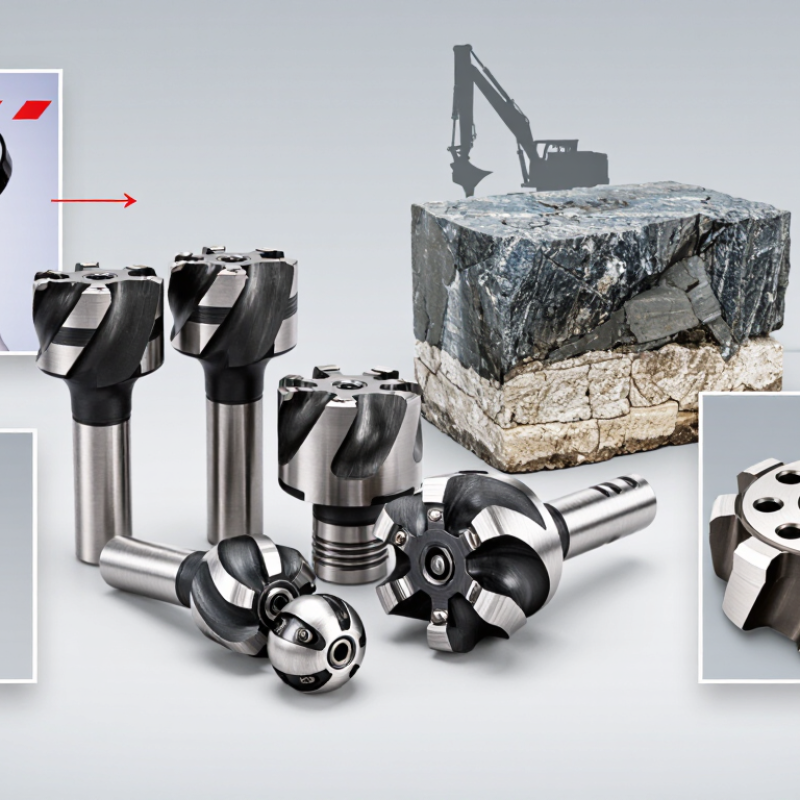
How to Choose the Best Quality Rock Drill Bit?
Understanding Rock Drill Bit Types and Their Core Applications
Choosing a rock drill bit begins with the rock, not the catalogue. Different formations demand different cutting actions. Top-hammer button bits suit many shallow and medium-depth holes in fractured rock. Their carbide buttons strike the face repeatedly. DTH hammer bits deliver impact near the hole bottom. They often perform better in deep, hard formations where energy loss matters. Rotary tricone bits use rolling cones and suit varied formations, while PDC bits cut continuously through softer, more uniform rock. The match must include drilling method, hole diameter, depth, and flushing conditions.
Quality appears in small, measurable features. Inspect button placement, carbide grade, gauge protection, thread accuracy, and flush-hole design. Buttons should sit evenly, without visible cracks or loose edges. Small details matter. A well-finished body reduces vibration and protects the connection.
In dusty quarry work, blocked flushing can overheat the bit quickly. In wet ground, poor chip removal may polish the face instead of cutting it. Site records should track penetration rate, wear shape, air or water pressure, and metres drilled. These observations are more reliable than a low purchase price.
The hardest decision is often between durability and cutting speed. An aggressive bit may drill quickly, but it can lose gauge in abrasive rock. A conservative design may last longer, yet waste energy. The trade-off matters. A useful, imperfect practice is photographing worn buttons before disposal. The images reveal patterns that memory misses. Consult qualified drilling personnel and technical data, then test cautiously on the actual formation. Laboratory claims cannot fully represent changing rock layers.
Choosing the best rock drill bit starts with identifying the rock formation. Rock is never simply “hard” or “soft.” Granite may contain abrasive quartz, while fractured limestone can break unpredictably. Dense, abrasive rock usually needs wear-resistant carbide buttons and strong face protection. Softer formations may perform better with sharper, more widely spaced cutting elements. A bit that works well in granite can clog or polish itself in clay-rich ground. Field testing remains essential.
The drilling method also determines the bit design. Top-hammer drilling transfers impact through the drill string, so the bit must resist repeated shock and uneven contact. Down-the-hole drilling delivers force directly behind the bit, often improving energy transfer in deep holes. Rotary drilling requires a different cutting action and may favor drag-style or roller-based designs. Match the bit diameter to the required hole size, but check the rig’s pressure, rotation speed, and flushing capacity first. Excessive rotation can quickly damage the gauge.
Watch the cuttings and drilling sound. Fine dust may indicate poor flushing, while sudden vibration can signal fractured ground or a worn bit. Inspect button wear after each shift, especially around the outer gauge. I have seen operators blame the rock when incorrect feed pressure caused the real problem. That mistake is easy to repeat. Record penetration rate, water or air use, and wear patterns for each formation. These practical notes often guide a better bit choice than catalog descriptions.
Choosing a quality rock drill bit starts with its material. A tough steel body must resist bending and repeated impact. Tungsten carbide buttons handle contact with hard rock. Their grade should match the formation, not simply appear harder.
I learned this distinction after seeing sharp buttons break during heavy vibration. Harder is not always better. Small details matter.
Design affects drilling speed, accuracy, and energy use. Button shape controls penetration and resistance to impact. Rounded buttons usually tolerate fractured formations well. Conical buttons can cut aggressively in softer, compact rock.
The bit face also needs effective flushing channels. Poor flushing leaves dust around the hole and increases heat.
Check the thread carefully. A damaged or poorly aligned thread can create dangerous vibration. Fit matters.
Manufacturing quality separates a dependable bit from an attractive sample. Look for controlled forging, consistent heat treatment, and secure carbide brazing.
The face should be symmetrical, with buttons set at even depths. Excessive variation may cause uneven wear.
Reliable manufacturers inspect hardness, thread dimensions, concentricity, and carbide bonding. Batch records add useful traceability.
I still question bits with impressive claims but no test data. Real performance depends on rock type, drilling pressure, rotation, and operator habits. A good selection can still fail when these conditions are ignored.
Performance depends on the rock, drilling method, and machine settings. A bit for hard granite needs different carbide buttons than one for soft limestone. Check penetration speed, vibration, and energy use during real drilling. A fast bit is not always better. Excessive speed can create heat and premature wear. Match the bit diameter, shank design, thread, and flushing system with your drill rig. Even a strong bit performs poorly when its connection is slightly mismatched.
Durability appears in the details. Inspect carbide buttons for cracking, uneven wear, or rounded edges after each shift. The body should resist deformation around the gauge area. Keep accurate drilling records, including metres drilled and ground conditions. I once judged a bit only by its first-day speed. That was a mistake. Its performance dropped sharply in fractured rock. This experience reminded me that consistent output matters more than impressive early results. Maintenance also affects service life. Clean the bit after use, remove blocked flushing holes, and store it away from moisture and impact.
Tips: Compare trial results under similar conditions. Measure hole quality, not only drilling speed. Rotate serviceable bits when wear becomes uneven. Follow the drill supplier’s recommended pressure and rotation range. Leave room for review; field conditions often challenge laboratory expectations.
How to Choose the Best Quality Rock Drill Bit?
Selecting a Reliable Supplier and Confirming Overall Purchase Value
Choosing a quality rock drill bit begins with the supplier, not the catalog photograph. A reliable supplier explains how the bit suits your rock hardness, drilling method, impact energy, and flushing conditions. Ask for material specifications, carbide details, thread tolerances, and inspection records. The supplier should also provide batch traceability and practical test data. Vague promises are not enough.
Request a sample before placing a large order. Check thread fit, cutting structure, gauge wear, brazing quality, and drilling speed under similar site conditions. On hard granite, poor flushing can create heat, dust, and rapid button damage. Small details matter. Speak with technical staff who understand these problems. A low unit price may hide frequent replacements, transport delays, or weak after-sales support. Compare cost per drilled metre, not only cost per bit. Include delivery reliability, warranty handling, spare availability, and response time.
One detail is often missed. A cheaper bit can increase downtime when its profile wears unevenly. That mistake is expensive. Keep a simple trial record with rock type, hole depth, drilling hours, and metres completed. Use those figures when comparing suppliers. The best purchase may not be the cheapest invoice; it should provide predictable performance, documented quality, and honest communication. Expect some uncertainty, because ground conditions change even within one site.
A practical evaluation framework for comparing rock drill bits and suppliers without relying on brand names
| Evaluation Dimension | Recommended Technical Benchmark | Why It Matters | Evidence to Request from the Supplier | Typical Risk if Overlooked | Suggested Weight |
|---|---|---|---|---|---|
| Rock Strength Compatibility | Match the bit design to the rock's unconfined compressive strength (UCS): approximately 20–80 MPa for soft to medium rock, 80–180 MPa for hard rock, and above 180 MPa for very hard formations. | A bit designed for the wrong strength range may drill slowly, suffer premature carbide damage, or experience excessive energy consumption. | Technical recommendation based on a rock sample, geological report, or documented field application with comparable UCS. | Low penetration rate, broken buttons, excessive vibration, and short service life. | 15% |
| Drilling Method and Bit Type | Use the correct configuration for the machine: top-hammer, down-the-hole (DTH), rotary, or rotary-percussive drilling. | Thread form, flushing design, shank geometry, and impact-energy requirements differ substantially between drilling systems. | Bit drawing, thread specification, compatible drill model, shank dimensions, and recommended operating parameters. | Connection failure, poor energy transfer, air leakage, or inability to install the bit. | 15% |
| Carbide Button and Face Design | Spherical buttons generally provide strong impact resistance; ballistic or sharper profiles can provide higher penetration in suitable formations. Button layout should support uniform wear and effective rock breaking. | The carbide grade, geometry, brazing or pressing quality, and button distribution strongly affect penetration and durability. | Carbide dimensions, button profile, material specifications, production tolerances, and sample inspection records. | Button cracking, pull-out, uneven wear, reduced penetration, or premature bit discard. | 15% |
| Flushing and Debris Removal | Air or water passages should provide consistent coverage of the cutting face and adequate removal of cuttings for the planned hole diameter and depth. | Effective flushing reduces regrinding of cuttings, overheating, clogging, and hole deviation. | Flushing-hole layout, recommended air or water flow, pressure range, and field performance data from comparable hole depths. | Blocked passages, low penetration, overheating, excessive dust, and unstable hole walls. | 10% |
| Gauge Protection and Hole Accuracy | Gauge buttons or peripheral inserts should maintain the required hole diameter under the project's abrasivity and impact conditions. | Loss of gauge can prevent casing installation, reduce blasting performance, and increase reaming or redrilling requirements. | Gauge-button arrangement, acceptable wear limits, regrinding guidance, and inspection procedure for under-gauge holes. | Undersized holes, deviation, casing installation problems, and additional drilling time. | 10% |
| Manufacturing Quality Control | Consistent heat treatment, accurate machining, controlled carbide placement, and traceable inspection should be demonstrated for every production batch. | Repeatable manufacturing quality is essential when several bits must perform consistently on the same project. | Material certificates, dimensional inspection reports, hardness records, batch numbers, and sampling or testing procedures. | Variation between bits, thread damage, premature breakage, and unpredictable operating costs. | 15% |
| Field Performance and Service Life | Compare performance using measurable indicators such as metres drilled per bit, penetration rate, operating hours, regrind cycles, and cost per metre. | Purchase price alone does not represent value; service life and drilling productivity usually have a greater impact on total cost. | Redacted field records, test results, drilling logs, sample evaluation reports, and references from comparable rock conditions. | Frequent bit changes, downtime, inconsistent output, and a high cost per drilled metre. | 15% |
| Thread and Dimensional Accuracy | Thread profile, pitch, shoulder contact, overall length, outside diameter, and flushing interface must match the drilling equipment specification. | Accurate mating surfaces transfer impact energy efficiently and reduce stress concentration at the connection. | Approved drawing, thread gauges, dimensional tolerances, inspection photographs, and sample-fit confirmation. | Thread galling, difficult removal, air loss, poor impact transfer, or damage to the drill string. | 10% |
| Supplier Technical Support | The supplier should provide bit selection, operating-parameter guidance, wear diagnosis, and recommendations for changing ground conditions. | Correct operating practices can significantly improve penetration, bit life, and drilling safety. | Written technical support process, response time commitment, operating guides, troubleshooting records, and after-sales contact details. | Slow problem resolution, incorrect bit selection, repeated failures, and avoidable downtime. | 10% |
| Delivery Reliability and Supply Capacity | Evaluate confirmed lead time, production capacity, safety stock, packaging quality, and ability to maintain consistent specifications across repeat orders. | A technically suitable bit has little value if it is unavailable when drilling operations are scheduled. | Production schedule, realistic lead-time statement, inventory policy, packaging specification, and order-fulfilment history. | Equipment idle time, emergency purchases, expedited freight, and project delays. | 10% |
| Total Cost per Metre | Use the formula: Total cost per metre = (bit price + freight + maintenance + downtime cost) ÷ metres drilled. | This provides a more reliable comparison than unit price and reflects actual drilling productivity. | Quotation, freight terms, expected service life, replacement policy, test results, and a trial-order cost comparison. | A low-priced bit may create a higher overall cost through short life, low penetration, or frequent replacement. | 20% |
| Recommended Decision Rule: Approve a supplier only after technical compatibility, quality consistency, field performance, delivery reliability, and total cost per metre have been verified. | 135%* | ||||
*Weights are a practical screening guide and may be adjusted for the project. UCS ranges, operating conditions, service life, and cost per metre should be confirmed through site data or a controlled trial because actual results vary with rock abrasivity, fracture pattern, drilling parameters, hole diameter, flushing conditions, and operator practice.
Identify hardness, abrasiveness, fractures, and clay content. Dense granite may need wear-resistant carbide buttons and strong face protection. Fractured limestone often benefits from tougher, rounded buttons. Rock descriptions can mislead. Field testing remains important.
Softer, compact formations may suit sharper, widely spaced cutting elements. Conical buttons can penetrate aggressively in suitable ground. Clay-rich material may clog the face and reduce performance. Watch the cuttings closely.
Top-hammer drilling requires resistance to repeated shock and uneven contact. Down-the-hole drilling transfers force directly behind the bit. Rotary drilling may require drag-style or roller-based cutting designs. The drilling method changes everything.
Match the bit diameter to the required hole size. Then check rig pressure, rotation speed, and flushing capacity. Excessive rotation can damage the gauge quickly. A correct diameter cannot fix poor machine settings.
Fine dust may indicate weak flushing around the hole. Sudden vibration can signal fractured ground or a worn bit. Record penetration rate, water or air use, and wear patterns. Sound is useful, but not perfect.
The steel body should resist bending and repeated impact. Carbide grades must match the formation, not merely appear harder. Wear-resistant grades suit abrasive rock. Tougher grades may reduce chipping in fractured ground. Harder is not always better.
Look for controlled forging, consistent heat treatment, and secure carbide bonding. The face should be symmetrical, with buttons set at even depths. Check thread dimensions, concentricity, hardness, and brazing quality. Uneven button depths can create uneven wear. Small defects matter.
Request material specifications, thread tolerances, inspection records, and test data. Ask for a sample before placing a large order. Check thread fit, gauge wear, brazing, and drilling speed. Compare cost per drilled metre, not only cost per bit. The cheapest invoice may cost more later.
Record rock type, hole depth, drilling hours, metres completed, and wear patterns. Include delivery delays, replacements, and support response time. Compare similar site conditions rather than isolated results. Ground conditions can change within one site. I would still question impressive claims without test data.
Choosing the Best Quality Rock Drill Bit requires more than selecting the hardest-looking tool. First, understand the main bit types and their applications, then match the bit to the rock formation, drilling method, hole size, and equipment being used. Soft, fractured, abrasive, and extremely hard formations each require different cutting structures and working characteristics. The right choice can improve drilling speed, hole accuracy, energy efficiency, and overall operational stability.
When comparing options, examine the bit’s material quality, tooth or button design, body construction, manufacturing precision, and resistance to wear, impact, and heat. A suitable bit should also be compatible with the drilling system, easy to inspect and maintain, and durable enough for the intended working conditions. Before purchasing, evaluate expected service life, performance consistency, delivery support, replacement availability, and total operating cost. Selecting a reliable supplier with clear quality standards and technical assistance helps ensure that the chosen bit delivers dependable performance and strong overall value.

KAT DRILLING