Top Drill Taper Bits Which Are Best for Global Buyers?

Time:2026-09-13 Author:Henry
0%

Choosing the right Drill Taper Bits is rarely a simple matter of selecting the hardest steel. Global buyers face different rock formations, drilling rigs, thread standards, budgets, and service expectations. A bit that performs well in dry granite may struggle in fractured limestone. Another may cut quickly but wear unevenly after only a few holes.

William C. Maurer, a respected drilling engineer and author of Advanced Drilling Engineering, expressed a useful principle: “The best bit is the one that drills at the lowest cost per foot.” That idea remains practical today. It shifts attention from purchase price to penetration speed, service life, replacement time, and total operating cost. Experienced buyers also inspect carbide grade, taper accuracy, shank dimensions, flushing performance, and supplier support. Small details matter.

This guide compares top Drill Taper Bits for international purchasing decisions. It considers hard rock, soft formations, quarry work, construction drilling, and demanding field conditions. Product descriptions can look impressive. Real performance is less tidy. Manufacturer claims may not match every jobsite. Even a premium bit can fail when feed pressure, rotation speed, or cooling is poorly controlled.

Our evaluation therefore combines technical specifications with practical use. We examine where each bit performs strongly, where it may disappoint, and which buyer should avoid it. No ranking is permanent. Ground conditions change, and my own preference may shift after longer field testing. That uncertainty deserves attention, not concealment. The best choice is the bit that matches the machine, material, operator, and maintenance discipline.
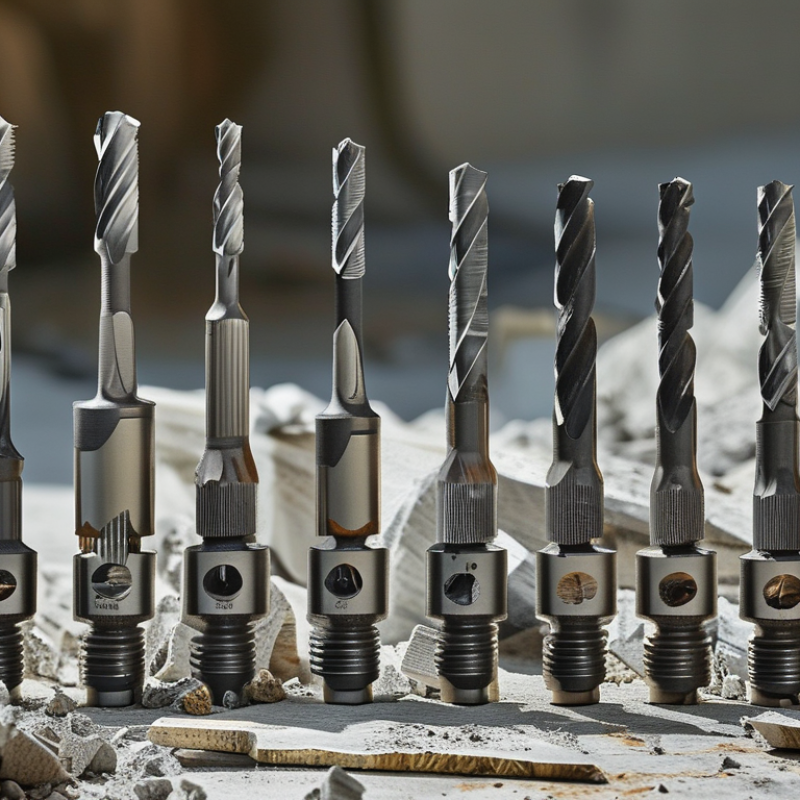
Top Drill Taper Bits Which Are Best for Global Buyers?

What Are Drill Taper Bits and How Do They Work?

Drill taper bits are cutting tools with a conical shank and a fluted working end. The tapered shank fits into a matching socket, chuck, or machine spindle. This connection centers the bit during rotation and transfers torque with limited slipping. In practical drilling work, operators value this stable fit when making deep holes in steel, wood, or masonry.

The cutting edges remove material as the bit turns. The flutes carry chips away from the hole and help reduce heat. A correct taper creates firm contact along the socket walls, rather than concentrating pressure at one small point. That detail matters. Poor contact can cause vibration, uneven holes, or difficult removal after drilling. Cutting speed, feed pressure, and lubrication must match the workpiece. One setting rarely suits every material.

Global buyers should check taper size, bit diameter, overall length, material grade, and machine compatibility. Hardened steel may offer better wear resistance, while softer materials can be easier to sharpen. Packaging should protect the cutting edges from moisture and impact during transport. Product drawings and dimensional tolerances also deserve careful review. A bit can look compatible but still fit poorly. This is an easy mistake, especially when regional sizing systems differ. Trial drilling on scrap material remains useful, although it cannot replace proper equipment checks.

Key Types of Drill Taper Bits for Different Drilling Applications

Top Drill Taper Bits Which Are Best for Global Buyers?

Tapered drill bits serve different rock conditions, hole sizes, and drilling methods. Taper chisel bits create fast cuts in soft to medium rock. They suit quarry work, shallow anchoring, and general construction. Taper cross bits offer better stability in fractured formations. Their four cutting edges can reduce uneven wear during repeated drilling. Taper button bits use rounded carbide inserts for harder rock and longer service intervals. They are common in mining, water-well, and geothermal applications.

Selection should begin with rock hardness, abrasiveness, flushing quality, and required hole diameter. A 2024 Grand View Research market report expects the global drilling tools sector to grow at roughly 5% annually through 2030. That growth reflects continuing demand from mining, infrastructure, and energy projects. The USGS Mineral Commodity Summaries 2025 reports global iron ore mine production near 2.5 billion metric tons in 2024. Such volumes underline the severe wear conditions faced by drilling tools.

Field inspection matters more than a catalog photograph. Check insert condition after every shift. A blunt bit may increase fuel use and reduce penetration. Smaller taper angles can improve holding strength, but they may complicate removal. Not always. Buyers should also confirm shank compatibility, steel quality, flushing-hole design, and regional replacement access. Reported performance can vary because operators measure penetration differently. That weakness deserves attention. A controlled trial on the actual formation remains the most reliable purchasing test.

Top Drill Taper Bits Which Are Best for Global Buyers? - Key Types of Drill Taper Bits for Different Drilling Applications
Practical comparison of common tapered rock-drilling bit designs. Performance depends on rock abrasiveness, compressive strength, drilling equipment, flushing quality, impact energy and operator settings.
Taper Bit Type Cutting Structure Best-Suited Ground Conditions Typical Applications Main Advantages Key Limitations Common Hole Diameter Range
Tapered Button Bit Carbide buttons arranged on the face and gauge. Medium-hard to very hard rock, including abrasive formations. Mining development, quarrying, construction drilling and general rock excavation. High penetration potential, good wear resistance and reliable gauge retention. Requires sufficient impact energy and effective flushing; incorrect grinding can reduce service life. 28–45 mm
Tapered Cross Bit Four carbide cutting edges forming a cross-shaped face. Soft to medium-hard rock and formations where hole straightness is important. Small-scale mining, quarrying, secondary breakage and general construction drilling. Stable drilling, simple sharpening and good resistance to bit rotation in fractured rock. Usually drills more slowly than button designs in hard, competent rock. 22–41 mm
Tapered Chisel Bit One or two continuous carbide blades across the bit face. Soft to medium rock, weathered rock and relatively non-abrasive formations. Utility trenching, small bench drilling, dimension-stone work and light construction. Low initial cost, easy maintenance and effective cutting in softer ground. Blade wear and hole deviation can increase in hard or highly abrasive rock. 22–38 mm
Tapered Retrac Bit Button or cross cutting face with a raised retrac shoulder behind the gauge. Fractured, broken or variable rock where rod retrieval may be difficult. Underground mining, drifting, face drilling and applications requiring improved rod release. Helps reduce sticking and protects the bit shoulder during withdrawal. Higher purchase cost and may require accurate matching with the rod and drilling system. 28–45 mm
Tapered Reaming Bit Oversize carbide cutting elements designed to enlarge an existing pilot hole. Competent rock where a larger final hole is needed after pilot drilling. Anchor holes, cable holes, drainage holes and selected construction drilling tasks. Produces larger holes with lower initial torque than drilling the full diameter in one pass. Needs a correctly sized pilot hole and adequate alignment; not intended for every drilling rig. 45–90 mm
Tapered Plugger Bit Compact carbide face, commonly used with short tapered rods. Soft to medium rock and shallow drilling conditions. Small plug holes, light quarrying, masonry work and secondary breaking. Compact design, easy handling and suitable for short-hole drilling. Limited depth capability and less suitable for high-energy drilling in hard rock. 22–32 mm
Tapered Drifter Bit Heavy-duty carbide button or cross layout for pneumatic or hydraulic drifters. Medium-hard to hard rock in demanding production environments. Underground headings, tunnelling, drifting, long-hole development and production drilling. Designed for higher impact energy, efficient flushing and repeated drilling cycles. Performance drops sharply if the bit, rod taper, shank and machine impact settings are mismatched. 32–51 mm
Tapered Water-Flushing Bit Carbide cutting structure with dedicated flushing holes or channels. Dust-sensitive sites, abrasive rock and applications requiring improved cuttings removal. Mining, quarrying, water-well pilot work and construction drilling where wet flushing is available. Improves hole cleaning, cools the cutting face and can reduce airborne dust. Needs clean water, compatible flushing passages and corrosion control during storage. 28–45 mm

How to Compare Taper Bit Materials, Designs, and Performance

Top Drill Taper Bits Which Are Best for Global Buyers?

Choosing a taper bit requires more than comparing prices. Material, geometry, and working conditions must match. A tough alloy-steel body can resist impact, while carbide buttons improve cutting strength in hard rock. However, excessive hardness may increase cracking under vibration. Ask for material grades, heat-treatment details, and carbide specifications. Reliable suppliers should provide test data, dimensional drawings, and quality records.

Design affects drilling speed and service life. Check the taper angle, shank size, button layout, flushing holes, and gauge protection. A well-matched taper transfers energy efficiently and reduces slippage. Wider buttons may improve penetration in some formations, but smaller buttons can offer better control in fractured rock. Performance also depends on rotation speed, feed pressure, water flow, and operator technique. A bit that performs well in granite may struggle in abrasive sandstone. No single design wins everywhere.

Tips: Compare bits under similar rock conditions. Track meters drilled, penetration time, visible wear, and replacement frequency. Inspect the bit after each shift. Small cracks around buttons matter. Request samples before a large order, and confirm compatibility with your drilling equipment and local standards. Supplier claims can be useful, but field records are stronger evidence. Even careful comparisons can miss temperature, operator, or flushing differences. That is worth reviewing.

Which Features Matter Most for Global Buyers?

For global buyers, a drill taper bit must match the machine, material, and working conditions. The taper shank is critical. A small mismatch can cause vibration, slipping, or uneven holes. Check the exact taper standard and gauge it before ordering. Do not rely only on a product photograph.

Material selection matters just as much. High-speed steel suits general drilling and offers practical toughness. Carbide can handle harder materials, but it needs stable equipment and careful alignment. A sharp point, balanced flutes, and consistent cutting edges improve hole quality. Coatings may reduce friction and extend tool life. However, coating claims should include test conditions, not vague promises. Ask for tolerance data, hardness information, and inspection records.

Global purchasing adds other concerns. Clear drawings should show dimensions in metric and imperial units when needed. Packaging must protect the cutting edges during long transport and changing humidity. Traceable batches make quality problems easier to investigate. Confirm compatibility with local machines, replacement availability, and technical support across time zones. I have seen buyers focus on unit price, then pay more for rejected holes and delayed production. That mistake is easy to repeat. A lower-cost bit is not automatically economical. Performance data, dependable documentation, and realistic delivery terms usually matter more. Test a small sample first. That step may feel slow, but it can expose an unsuitable taper before a large order.

How to Choose Reliable Taper Bits for International Projects

Selecting reliable taper bits for international projects starts with ground conditions, not catalog rankings. A bit that performs well in soft limestone may stall in abrasive granite. Check rock strength, fracture pattern, moisture, and required hole depth. Match the taper angle, shank size, button shape, and flushing design to the drill system. Small mismatches create vibration, uneven wear, and lost production. Keep it practical.

Ask suppliers for material specifications, heat-treatment records, dimensional tolerances, and test data. Independent inspection is useful when orders cross borders. Request sample pieces before committing to a large shipment. Measure penetration rate, wear after a fixed drilling length, and shank damage. Reliable suppliers should explain replacement policies, packaging, lead times, and export documents clearly. Vague answers deserve caution.

Global work also exposes bits to salt air, freezing storage, and rough inland transport. Use sealed packaging, corrosion protection, and clear batch labels. Confirm compatibility with local equipment and maintenance skills. Cost per piece can mislead; calculate cost per drilled metre instead. No choice is perfect. A lower-cost bit may perform well in one formation and fail badly in another. Review field records after each project, including failures, because uncomfortable data often improves the next purchase.

FAQS

What should global buyers compare when choosing a taper bit?

Compare material, geometry, rock conditions, and drilling performance. Price alone can mislead. Match the bit to the actual ground.

Which materials are commonly important in taper bit construction?

Tough alloy steel can resist impact. Carbide buttons improve cutting in hard rock. Excessive hardness may increase cracking during vibration.

How does taper bit design affect drilling results?

Check taper angle, shank size, button layout, flushing holes, and gauge protection. A good match transfers energy efficiently and reduces slippage.

Should buyers choose wider or smaller carbide buttons?

Wider buttons may improve penetration in some formations. Smaller buttons can offer better control in fractured rock. Neither option works everywhere.

How can buyers compare bit performance fairly?

Test bits under similar rock conditions. Record drilled metres, penetration time, visible wear, and replacement frequency.Keep records.

What supplier information should buyers request before ordering?

Request material grades, heat-treatment records, dimensional drawings, carbide details, test data, and quality records. Vague answers deserve caution.

Why are samples useful before a large international order?

Samples reveal penetration rate, shank damage, and wear after a fixed drilling length. Laboratory claims may miss field problems.

How should buyers calculate the real cost of a taper bit?

Calculate cost per drilled metre, not only cost per piece. A cheaper bit may fail quickly in abrasive rock.

What shipping and storage risks can affect taper bits?

Salt air, freezing storage, and rough transport can cause damage. Use sealed packaging, corrosion protection, and clear batch labels.

What mistakes should buyers review after a drilling project?

Review failures, operator technique, flushing differences, temperature, and equipment compatibility. Careful comparisons still miss things. That matters.

Conclusion

Drill Taper Bits are specialized cutting tools designed to create accurate holes while maintaining stable contact between the bit and drilling equipment. Their tapered shank supports secure fitting, efficient torque transfer, and smoother operation. Different types are suited to applications such as mining, construction, geological exploration, and industrial drilling, with variations in shape, cutting structure, flushing design, and connection method.

For global buyers, selecting the right Drill Taper Bits requires careful comparison of material quality, heat resistance, wear durability, drilling speed, hole accuracy, and performance in different ground conditions. Reliable taper bits should match the equipment, rock formation, project depth, and expected workload. Buyers should also evaluate manufacturing consistency, dimensional compatibility, packaging, technical documentation, quality inspection, and supplier communication. A balanced choice can help reduce tool replacement, improve productivity, and support dependable performance across international projects.


Henry

Henry

Henry is a dedicated marketing professional with a profound expertise in the company's offerings. With years of experience in the industry, he possesses an impressive understanding of the market dynamics and consumer behaviors that drive success. Henry is committed to sharing his insights through......