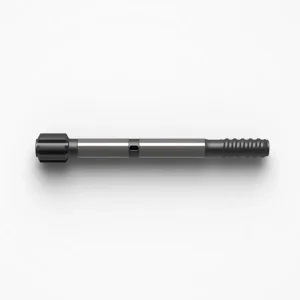
Hexagonal Steel
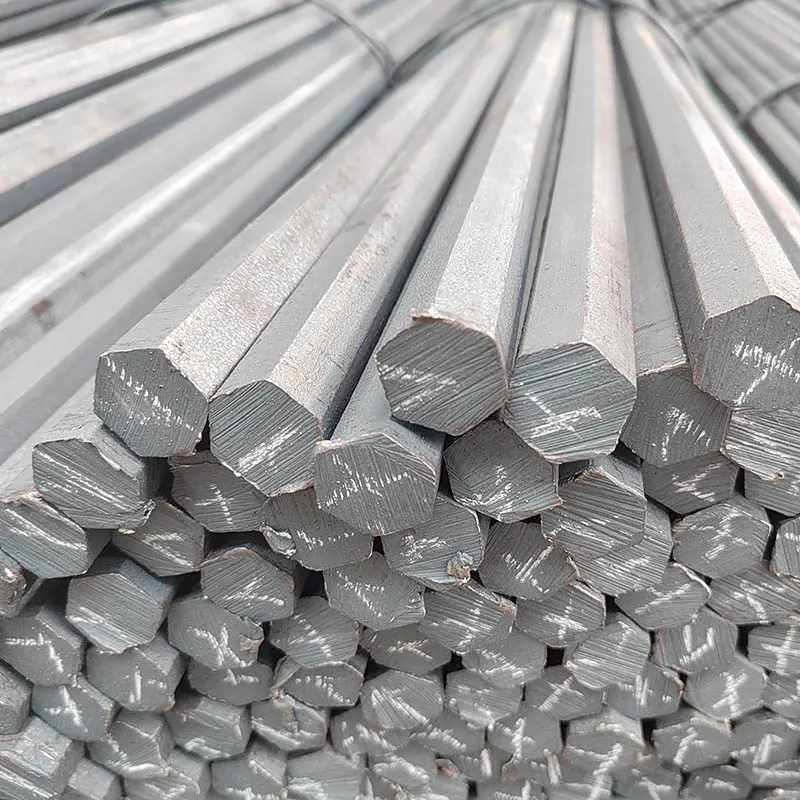
Hexagonal steel, also known as hex steel, is a kind of steel product with a hexagonal cross-section. The following is a detailed introduction to it:
Definition and Shape
- Hexagonal steel is named for its unique hexagonal cross-sectional shape. The six sides of the hexagon are of equal length, and the angles between adjacent sides are all 120 degrees, presenting a regular hexagonal structure.
Production Process
- Hot Rolling: This is one of the most common production methods. First, the steel billet is heated to a high temperature until it reaches a suitable plastic state. Then, it is passed through a series of rolling mills with specific grooves. During the rolling process, the steel billet is gradually deformed and finally takes on the shape of hexagonal steel.
- Cold Drawing: Cold drawing is usually used to produce hexagonal steel with higher precision and better surface quality. Based on the hot-rolled hexagonal steel, it is further processed by pulling it through a die with a smaller aperture at room temperature. This process can improve the dimensional accuracy and surface smoothness and enhance mechanical properties.
Materials for Hexagonal Steel
Common materials mainly include carbon steel, alloy steel, and stainless steel. Specific types include:
Carbon Steel
- SAE 1045: Medium strength and good machinability, suitable for general mechanical components.
- SAE 1070: High-carbon steel with high strength and hardness, ideal for wear-resistant parts.
- 65Mn: High-carbon manganese steel with good elasticity and toughness, suitable for springs and elastic components.
Alloy Steel
- 40Cr: Widely used alloy structural steel for shafts, gears, and bolts in automobiles and machinery.
- 42CrMo: High strength and better hardenability, suitable for large parts and high-reliability components.
- 35CrMo: Features high temperature strength and creep resistance, used under high temperature and high pressure conditions.
Stainless Steel
- 304: Austenitic stainless steel with excellent corrosion resistance, used in food processing and medical equipment.
- 316: Enhanced corrosion resistance due to molybdenum, ideal for marine engineering and chemical equipment.
- 2205: Duplex stainless steel with high strength and stress corrosion resistance, suitable for oil, gas, and desalination plants.
FAQ - Hexagonal Steel
Q1: What is the main difference between hot-rolled and cold-drawn hexagonal steel?
Hot rolling is a high-temperature process used for primary shaping, while cold drawing is performed at room temperature to achieve higher dimensional precision and a smoother surface finish.
Q2: Why is the hexagonal shape beneficial for mechanical manufacturing?
The hexagonal shape provides six flat surfaces that are ideal for gripping with tools, ensuring efficient torque transmission and secure fixation for parts like nuts and bolts.
Q3: Which material should I choose for high-corrosion environments?
Stainless steel grades like 316 or 2205 are recommended for harsh environments (like seawater or chemical plants) due to their superior corrosion resistance.
Q4: Is hexagonal steel suitable for structural construction?
Yes, it is often used in steel structures for roofs and bridges because its unique geometry offers excellent stability and tensile strength.
Q5: Can hexagonal steel be further processed?
Absolutely. Hexagonal steel has good processability and can be easily cut, drilled, welded, and threaded to meet specific project requirements.
 KAT DRILLING