Kiribati, comprising 32 atolls and one raised coral island (Banaba) dispersed over 3.5 million square kilometers of the Pacific Ocean, faces unprecedented geological challenges in civil engineering and municipal water security projects. Geotechnically, the ground profile of Kiribati consists almost entirely of highly porous coralline limestone, loose coral gravel sands, and varying densities of calcarenite. Standard drilling techniques frequently fail in these conditions due to extreme borehole instability, dynamic voids, and hyper-saline ground water which accelerated galvanic corrosion on standard steel tooling.
Whether executing deep water well installations in South Tarawa, establishing foundations for maritime causeways, or implementing coastal stabilization anchors to combat rising sea levels, selecting the correct DTH (Down-The-Hole) hammer and self-drilling anchor configuration is critical. Because atoll limestone exhibits variable compressive strengths (often dropping from 40 MPa to less than 5 MPa within centimeters of drill travel), rotary and hammer systems must exert precise impact energy ratios to prevent excessive hole deviation and cavern collapse.
"Unconsolidated coral sand layers beneath harder caprock require anchor casings and DTH bits that perform clean concentric flushing. Traditional tools risk washing away the matrix, causing surface sinkholes during coastal piling."
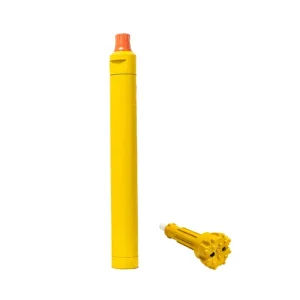
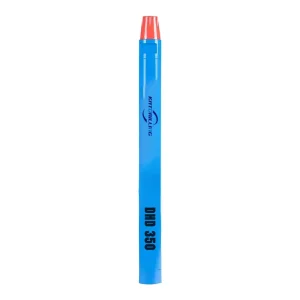
Atoll limestone features high structural porosity. Using DHD360 and DHD350 DTH Hammers allows high-volume air flushing combined with localized mud-rotary sealing options to prevent drilling energy loss in underground caverns.
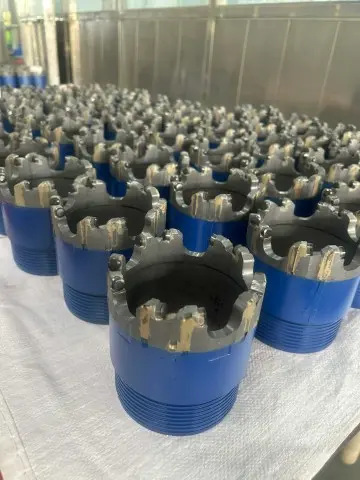
Our DTH drill bits undergo a specialized double-tempering heat treatment process. This structural reinforcement prevents marine chloride pitting and stress corrosion cracking (SCC) common in equatorial Pacific worksites.
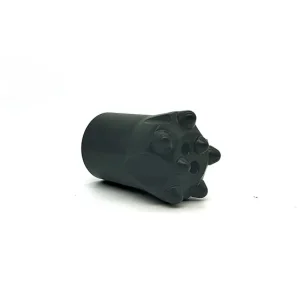
For Kiribati atolls, button bits featuring semi-ballistic tungsten carbide inserts are recommended. They maximize penetration rate while preventing the rotational binding typical of spherical buttons in variable strata.

We have more than 40 years of drilling tool manufacturing experience. All this expertise is built into all our rock drilling tools - for your benefit.
We look for outstanding performance in all our products and services. Ultimately, that means excellent hole quality and low-cost drilling for you.

We are one of the professional rock drilling tool manufacturers in China. Our state-of-the-art products will also give you a leading edge.

We offer you tophammer equipment and DTH equipment for every application, such as underground mining and tunneling, surface mining, well drilling and quarries, and road and construction.
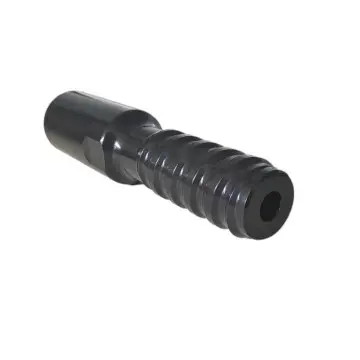
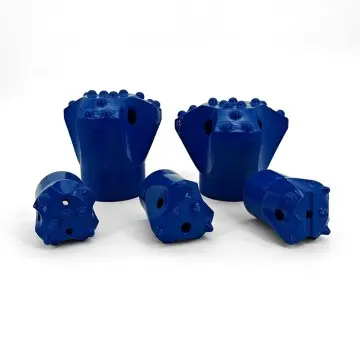
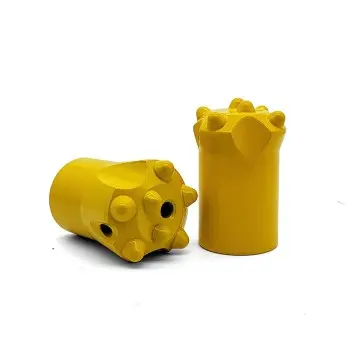
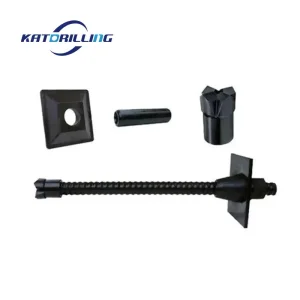
In low-elevation maritime geographies like Kiribati, the stability of sea-defense structures is paramount. Civil engineering programs under the Ministry of Infrastructure and Sustainable Development (MISD) and development partners must account for unique sub-surface parameters when designing retaining walls, foundations, and deep boreholes. This is where Self-Drilling Anchor Systems (SDA), specifically R25, R32, R38, and R51 threads, provide unmatched advantages over traditional drilling methods.
Traditional casing methods in unstable sands require separate cycles of drilling, casing removal, and inserting tendon bars. This leads to immediate borehole cave-ins. Self-drilling anchors circumvent this by integrating the drill bit, hollow anchor bar, and sacrificial grout conduit into a single system. In Kiribati coastal works, the R32 or R38 anchoring systems are drilled into the marine soil while simultaneously injecting cement grout through the hollow core of the steel bar. This grout permeates the surrounding porous coral formations, creating a consolidated shear-resistant bulb of solid soil-cement matrix.
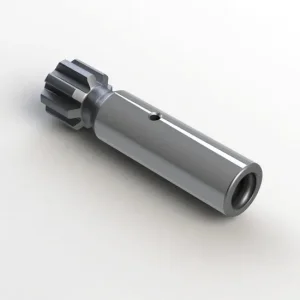
Kiribati water wells and structural piles must operate immediately beneath the high water table, meaning DTH hammers must strike while submerged in saline groundwater. Our DHD360 and DHD350 DTH Hammers are configured with check valves that prevent seawater and abrasive coral dust from flowing backward into the hammer chamber when air pressure drops. The high-performance foot valves installed on our DHD360 hammer bits minimize structural air loss, ensuring the piston transmits maximum impact kinetic energy to the rock face instead of dispersing into the surrounding porous voids.
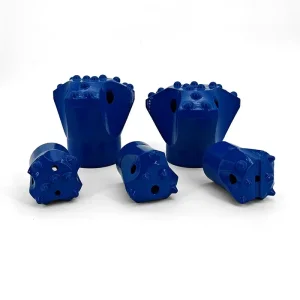
"For marine anchoring projects on Tarawa and Kiritimati, R51 Self-Drilling Anchor Bars coupled with T-type button bits ensure continuous drilling through rubble and quick-setting grout placement in a single, non-stop operation."
Equipment deployed to Kiribati is subject to severe ambient atmospheric and marine corrosion. Shandong Kat Drilling Tools addresses this by utilizing raw steel alloys featuring high chromium-nickel-molybdenum compositions. This molecular formulation develops a passive oxide layer, resisting immediate hydrogen embrittlement caused by drilling through salt-saturated sands. The threads on our R32, R38, and R51 anchor systems undergo precision CNC rolling which induces compressive residual stresses, dramatically extending the fatigue life of the connection points under continuous hammer impacts.
SHANDONG KAT DRILLING TOOLS is one of the most professional manufacturer of Rock drilling Tools in China. In terms of overall strength, it takes the lead among enterprises of the same industry in China. The company mainly produces over 500 kinds of products such as rock drilling tools, mining tools and drilling tools.
Read more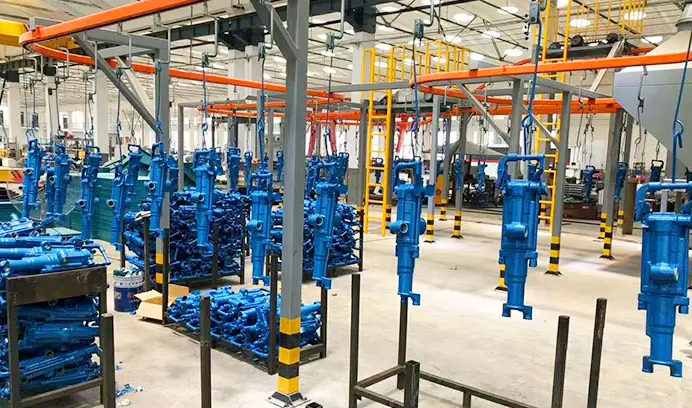

Purchasing industrial drilling equipment from Kiribati requires meticulous coordination due to remote logistics, containerized maritime shipping, and strict project timelines. A delay of one week in container dispatch from China can translate into a month-long project halt in Tarawa due to trans-shipment schedules in Fiji or the Marshall Islands. Our Factory 4.0 facilities in Shandong, China, mitigate these risks by combining automated production lines with highly transparent supply chain management.
Our DTH bits and self-drilling anchor bars are fabricated using premium steel alloys under computerized thermal cycles. We operate automated atmospheric controlled carburizing furnaces that ensure depth-hardness uniformity of HRC 58-62 at the wear face, while retaining a resilient, ductile core of HRC 38-42 to absorb impact shocks. The tungsten carbide button insertion is performed using automated heat-shrink hydraulic locking presses, eliminating the human error and micro-voids associated with manual brazing. This is why our button bits resist fracturing even when encountering hard igneous cobbles within loose marine limestone matrices.
"All products, from R25 thread anchor bars to DHD360 drill hammers, are manufactured in compliance with ISO 9001:2015 quality standards. Every batch is subjected to ultrasonic flaw detection and magnetic particle testing before crating for export."
To support buyers in Kiribati, we offer optimized container consolidation and specialized export packing. Because ocean freight to the Pacific requires weeks of sea-transit exposed to humid, salty air, all our steel components undergo a multi-layer anti-rust treatment. They are dipped in corrosion-resistant polymer coatings, vacuum wrapped in moisture-barrier foils, and packed into heavy-duty, steel-banded marine plywood crates. This guarantees that your DTH bits and anchor assemblies arrive on-site in Tarawa or Christmas Island in factory-fresh condition, ready for deployment.
 KAT DRILLING