 KAT DRILLING
1 / 4
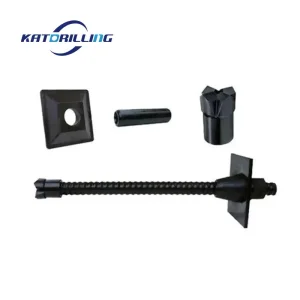
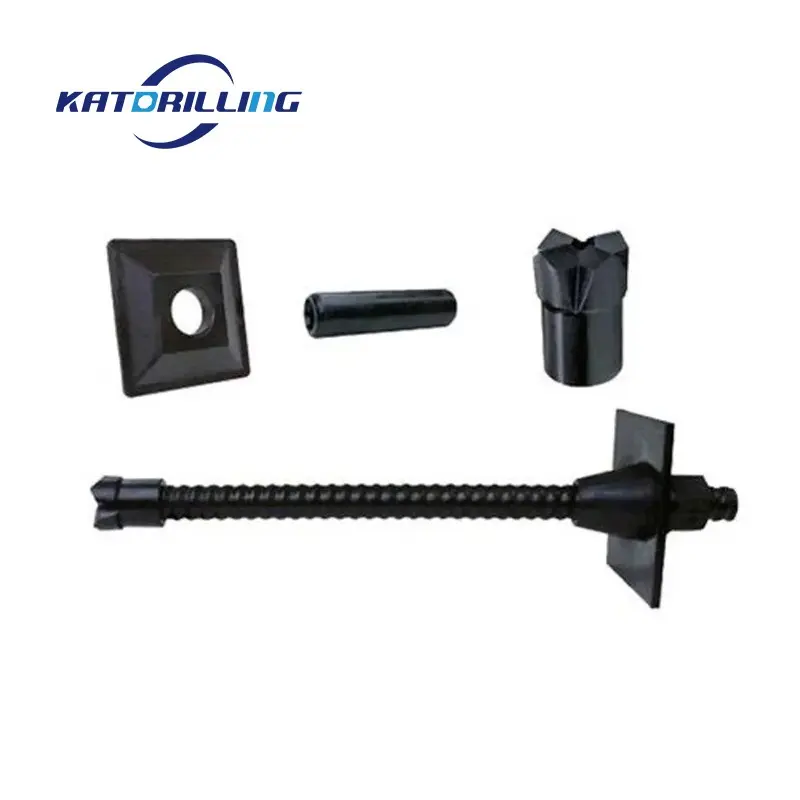
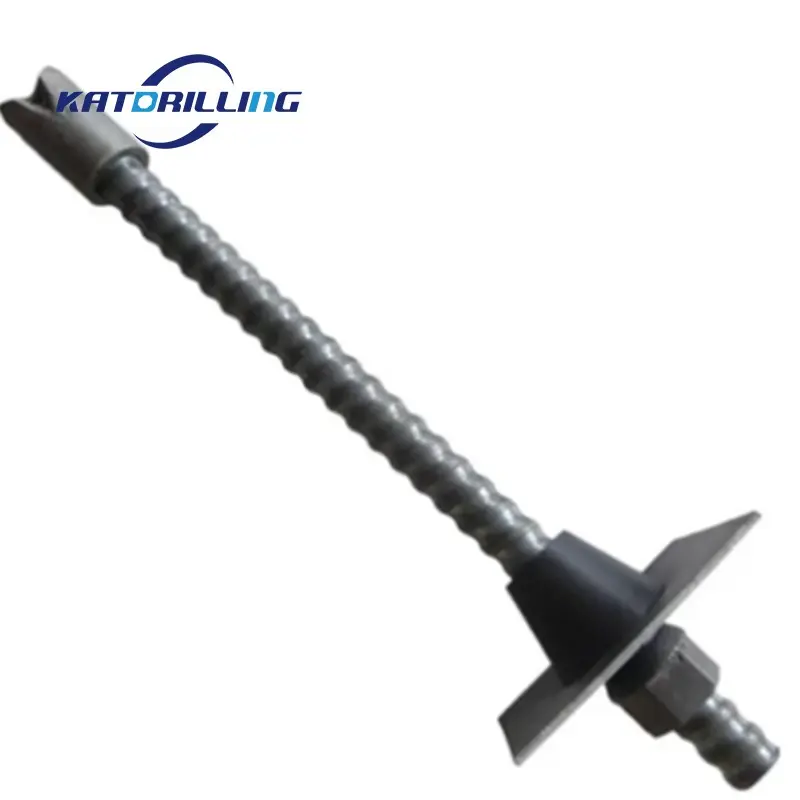
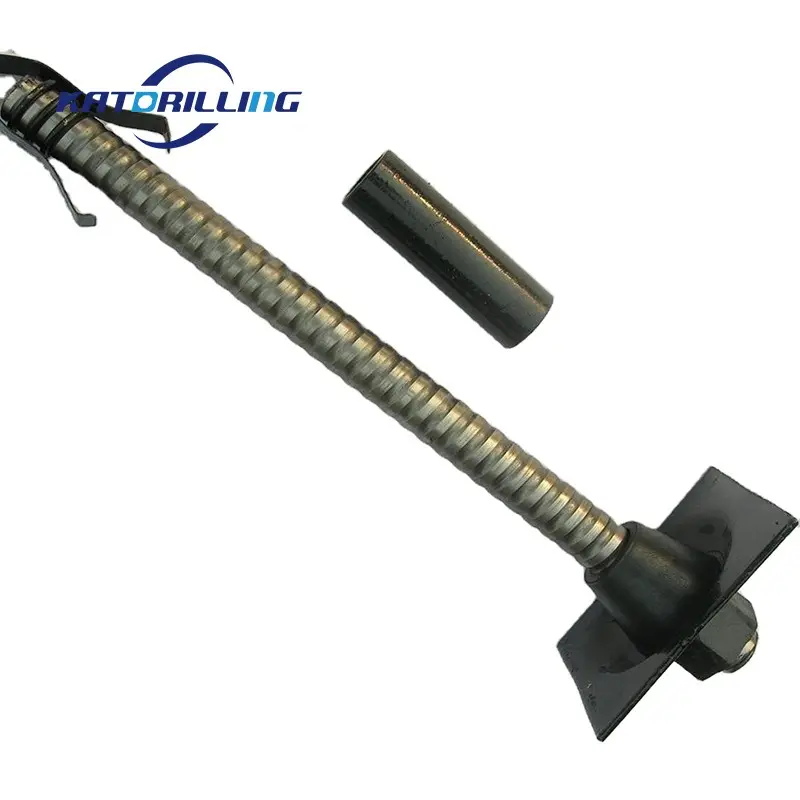
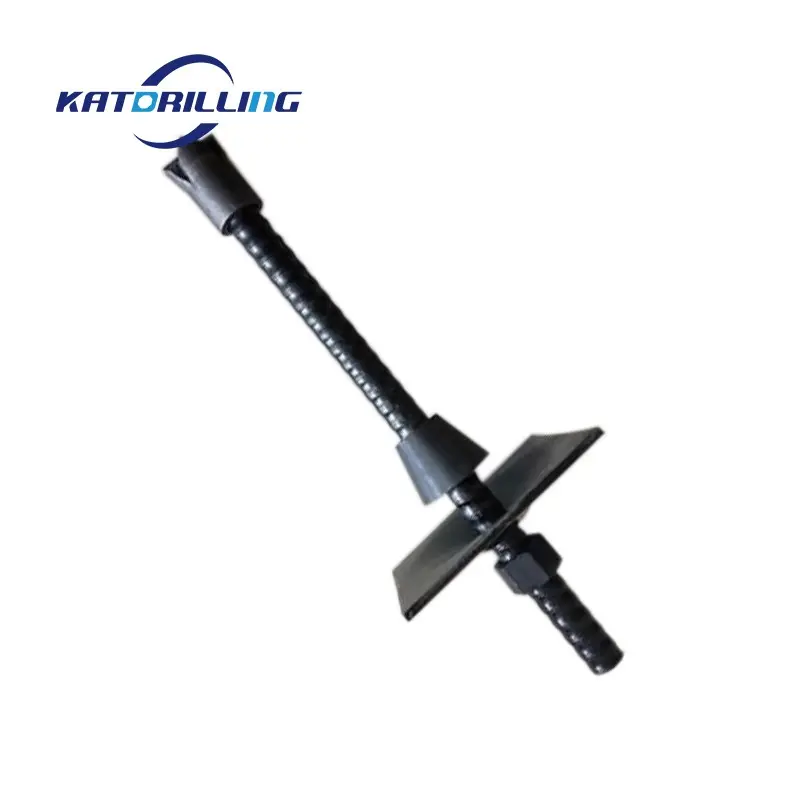
Comprised of a hollow threaded bar attached with a drill bit that performs drilling. The hollow bar allows air and water to freely pass through during drilling to remove debris. Grout fills the hollow bar through pressure, completely covering the entire bolt.
The coupler joins hollow bars to extend the bolt length, allowing the anchor to be elongated based on site requirements.
Installed according to specific design requirements to provide secure anchoring and load distribution.
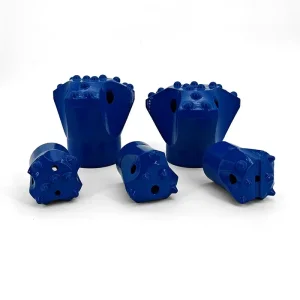
A wide range of drill bits are available, selected based on specific ground and geological conditions.
| Hollow Anchor Bar | |||||
|---|---|---|---|---|---|
| Size | Outer Dia. | Inner Dia. | Ultimate Load | Yield Load | Weight |
| (mm) | (mm) | (kN) | (kN) | (Kg/m) | |
| S-R38/20 | 38 | 20 | 500 | 400 | 5.5 |
| E-R38/22 | 38 | 22 | 500 | 400 | 4.95 |
| E-R38/18 | 38 | 18 | 550 | 430 | 6 |
| C-R38/22.5 | 38 | 22.5 | 500 | 400 | 4.8 |
| C-R38/21 | 38 | 21 | 500 | 400 | 5.25 |
| Coupler | ||||
|---|---|---|---|---|
| Size | Outer Dia. | Length | Weight | Note |
| (mm) | (mm) | (Kg/pc) | ||
| S-R38 | 51 | 180 | 1.33 | With sealing structure |
| 51 | 200 | 1.5 | ||
| 51 | 220 | 1.67 | ||
| E-R38 | 51 | 180 | 1.38 | Without sealing structure |
| 51 | 200 | 1.55 | ||
| 51 | 220 | 1.68 | ||
| Drill Bit Selection | |||
|---|---|---|---|
| Type | Outer Dia. | Weight | Application Range (Advice) |
| (mm) | (Kg) | ||
| Steel cross bit | 76 mm | 1.2 | Hardened cross bit for loose to medium dense conditions with small boulders |
| 90 mm | 1.4 | ||
| Steel arched bit | 76 mm | 1.2 | Hardened arched bit for optimized geometry for unconsolidated soil with small boulders |
| TC arched bit | 115 mm | 2.85 | TC arched bit for optimized geometry for soft to medium rock formations |
| TC cross bit | 76 mm | 1.25 | TC cross bit for soft to medium rock formations |
| 90 mm | 1.45 | ||
| TC 3 cutter bit | 76 mm | 0.85 | TC insert bit for soft to medium rock formations |
| Steel button bit | 76 mm | 1 | Hardened button bit for unconsolidated rock with boulders |
| TC button bit | 76 mm | 1 | TC insert button bit for medium rock formations |
| Hex Nut Specifications | ||||
|---|---|---|---|---|
| Size | Key Size | Length | Weight | Hardness |
| (mm) | (mm) | (Kg/pc) | (HRC) | |
| S-R38 | 50 | 60 | 1.47 | 25-30 |
| Plate Selection (Domed & Anchor) | ||||
|---|---|---|---|---|
| Type | Dimensions (mm) | Thickness (mm) | Hole Dia. (mm) | Weight (Kg/pc) |
| Domed Plate (E-R38) | 150×150 | 8 | 41 | 3.6 |
| Domed Plate (E-R38) | 200×200 | 12 | 41 | 1.38 |
| Anchor Plate (E-R38) | 140×140 | 35 | 41 | 5 |
| Anchor Plate (E-R38) | 150×150 | 25 | 41 | 4.1 |
| Anchor Plate (E-R38) | 200×200 | 12 | 41 | 3.67 |